Become confident at explaining and demonstrating household appliances
sojrevixu trains product specialists to compare models clearly, handle customer questions methodically, and run demonstrations that feel professional in a retail environment.
Disclaimer: This website provides educational training only and does not directly sell appliances or consumer products.
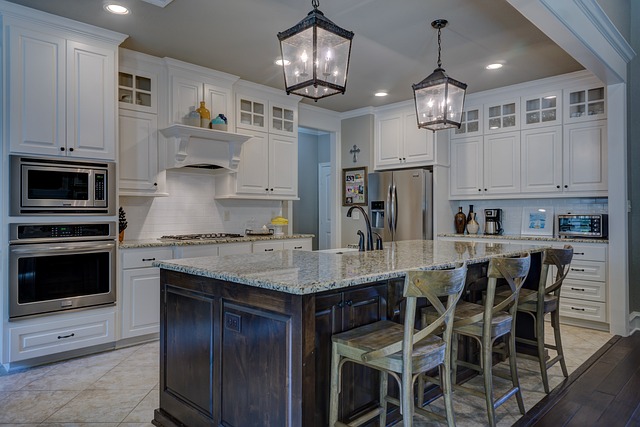
Built for real conversations on the shop floor
Learn to translate specs into customer value, without overselling or guessing. Clear, repeatable scripts and comparison frameworks.
2022 • UK-based training brand
Modules, checklists, and demos you can rehearse.
Side-by-side evaluation without brand bias.
Handling objections and follow-up questions.
Consent-based cookies and clear data handling.
What this course covers (and why it’s practical)
Household appliances are spec-heavy, and most customers don’t shop by reading datasheets. The difference between a confident product specialist and an “I think so” answer is a repeatable method: how to translate energy ratings, noise figures, capacity, cycle programmes, and installation constraints into a simple recommendation that fits the customer’s use case.
The sojrevixu course focuses on product categorisation, comparison heuristics, and live demonstration technique for common categories such as laundry, dishwashing, refrigeration, cooking, and floorcare. You’ll practise a consistent consultative flow—discovery questions, narrowing criteria, explaining trade-offs, and closing with clear next steps. The content is written for real retail environments: short interactions, interruptions, and shoppers who want clarity without pressure.
You won’t be asked to memorise model numbers or manufacturer scripts. Instead, you’ll learn how to use feature mapping, decision matrices, and a “must-have vs nice-to-have” filter so you can compare any two appliances with confidence, even when the range changes.
Appliance Product Foundations
Build a working mental model of how appliances are designed and specified: capacity, load types, energy usage, noise, maintenance, installation, and usability factors that show up in real questions.
- Feature mapping: what matters vs what distracts
- Spec translation: turning numbers into outcomes
Comparison Method
Learn a simple decision matrix to compare models fairly, including trade-off language that keeps the conversation honest and clear.
Consultative Flow
A repeatable talk track: discovery questions, narrowing criteria, handling interruptions, and closing with next steps.
Demonstration Technique
How to demo a feature without theatrics: safety checks, pacing, setup, and a clean explanation of what the customer should notice.
Retail Language
Practical phrasing for objections and constraints: delivery, installation, noise, and running costs.
Course curriculum snapshot
The curriculum is designed like a shop-floor playbook: short modules, clear definitions, and practical drills. Each module introduces a small set of concepts and then uses realistic scenarios—different household sizes, kitchens with constraints, noise sensitivities, and energy-cost conversations—to practise explanation and comparison. The goal is fluency: you should be able to talk about a product category without reaching for a cheat sheet, while still being accurate.
Laundry: cycles, capacity, and care
Drum size, spin speed, programme selection, fabric care, and how to explain running cost trade-offs without oversimplifying.
Dishwashing: layout and performance
Place settings vs real load types, rack ergonomics, drying methods, and common objections around noise and cycle length.
Refrigeration: space and food storage
Internal volume, airflow, humidity zones, freezer drawers, and how to discuss footprint and installation clearance.
Cooking: ovens, hobs, and ventilation
Heat distribution, cleaning methods, safety, and explaining induction vs gas vs ceramic through concrete examples.
Floorcare: practical feature evaluation
Suction vs airflow, filtration, brush heads, noise, and how to explain upkeep and consumables in plain language.
Retail communication drills
Objection handling, “good / better / best” positioning without pressure, and clean handovers to delivery and installation.
Benefits that matter in day-to-day retail
Good appliance advice is rarely about one “best” product. It’s about narrowing options, setting expectations, and explaining trade-offs without sounding uncertain. This course trains that muscle. You’ll learn a consistent way to frame efficiency, noise, cycle time, capacity, and installation constraints so customers can make decisions calmly.
The method is deliberately unglamorous: define the customer’s constraints, choose comparison criteria, then walk through options in a structured order. That approach reduces backtracking, avoids over-claiming, and prevents mismatched purchases that lead to returns. It also makes team training simpler because the language is shared.
Clear talk tracks
Reusable scripts for explaining specs, running costs, and feature differences without waffle.
Repeatable comparisons
A decision matrix you can use across brands and product updates, including “must-have vs nice-to-have.”
Demonstrations that land
How to set up, pace, and narrate a demo so customers understand what they’re seeing.
“When the range changed, we didn’t scramble. The team used the same criteria and talk track to compare new models, and the conversations stayed calm and consistent.”
Client feedback • Sam T., Training Lead, appliance retailer in West Yorkshire
Disclaimer: This website provides educational training only and does not directly sell appliances or consumer products.
How it works
The course is structured around a simple loop: learn a concept, apply it to a realistic customer scenario, then practise the language you would use in front of an appliance display. Each step includes quick checks that prevent common mistakes, like over-promising, mixing up capacities, or skipping installation constraints. You’ll also see how to handle the awkward moments: when two products are genuinely similar, or when a customer’s priorities conflict.
-
01
Learn the category map
Start with the “category map” for a product type: which specs are reliable indicators, which are marketing noise, and which constraints can invalidate a model (fit, venting, water supply, clearance, or power requirements).

- Create a short list of comparison criteria
- Identify non-negotiables (fit, power, plumbing)
-
02
Compare two models methodically
Use a decision matrix to compare models. Instead of listing everything, you’ll lead with the two or three criteria that matter for the scenario, then add detail only if it changes the recommendation.
- Explain trade-offs with neutral language
- Avoid over-claiming on efficiency and noise
-
03
Run a clean demo
Demonstrations work when they’re simple. You’ll learn how to set expectations (“what you will see”), show the feature safely, and summarise the value in one sentence that matches the customer’s criteria.

- Set up, show, summarise (three-step pattern)
- Use a “one benefit, one proof” closing line
-
04
Handle follow-ups and handover
You’ll practise the final mile: confirming the choice, setting expectations, and handing over accurately to delivery and installation. The focus is on clarity and reducing preventable friction.

- Confirm constraints: dimensions, clearance, connections
- Summarise the reasons in one short recap
What past cohorts and managers say
We avoid platform-style ratings and logos. Instead, we collect short feedback notes after training sessions. The quotes below reflect the kinds of outcomes the course is built for: clearer explanations, fewer meandering comparisons, and more consistent demonstrations.
“The decision-matrix approach stopped us from listing specs for the sake of it. We now pick three criteria, explain the trade-off, and the customer actually follows the logic. It’s calmer and faster.”
Aisha R., Department Supervisor, appliance retailer in Leeds
“The demo module was the surprise. Small changes—setup, pacing, one-sentence recap—made demonstrations feel professional, even when we only have a minute. New starters copy the structure quickly.”
Tom W., Training Coordinator, home appliance showroom in York
“We used the refrigeration section immediately. The language for clearance and airflow is clear, and it prevented a few avoidable mismatches. The training doesn’t push brands; it teaches reasoning.”
Marta K., Store Manager, appliance retailer in Sheffield
Registration and contact
Register interest with name and email
Use the short form to register your interest in the course. We’ll reply with next steps, schedule options, and what to expect from the curriculum. If you have a specific question—training for a team, adapting modules to a retail layout, or focusing on a product category—use the message form below.
Address
Unit C1 Willow Court Lotherton Way, Garforth, Leeds, England, LS25 2GBCompany ID: 397726634
Disclaimer: This website provides educational training only and does not directly sell appliances or consumer products.
Registration form
We only ask for your name and email to respond. We do not sell personal data.
Contact form
If you have a question about the training content, delivery format, or group enrolments, send a message and we’ll respond by email.
FAQ
These are the common questions we receive from trainees and team leads. If you have a different question, use the contact form and we will respond by email.
Is this course tied to specific manufacturers or brands?
No. The training focuses on product principles and comparison method rather than brand scripts. You’ll learn how to evaluate features, explain trade-offs, and demonstrate safely in a way that transfers across changing ranges and store assortments.
What appliance categories are covered?
The core modules cover laundry, dishwashing, refrigeration, cooking, and floorcare. The emphasis is on the comparison criteria that matter most and the language to explain them accurately, not memorising product lines.
Will it help with customer objections and difficult questions?
Yes. A dedicated module practises objection handling and constraint checks. You’ll learn phrasing for noise concerns, energy and running cost discussions, space and fit issues, and “two models look the same” comparisons.
What data do you collect when I register?
The registration form collects your name and email so we can reply with course details. If you use the contact form, we also collect the message you write. For details on cookies and analytics consent, see the Privacy Policy and Cookie Policy.
Is this a shop or a product sales site?
No. This website provides educational training only and does not directly sell appliances or consumer products. The aim is skill-building for product specialists and retail teams.
Ready to build confident appliance explanations?
Register interest and we’ll email you the next steps. No manufacturer promotions, no product sales—just training.
Disclaimer: This website provides educational training only and does not directly sell appliances or consumer products.